I remember the exact moment I first heard about NAD+.
I was deep in a research hole at midnight, trying to understand why I felt so flat all the time. Not sick. Not depressed. Just… running on less than I used to. Someone mentioned NAD+ in a comment thread and I thought, what is that, some kind of supplement brand?
It is not. It is a molecule your body already makes. And what I learned about it in the next hour changed how I think about aging completely.

What NAD+ actually is
NAD stands for nicotinamide adenine dinucleotide. You do not need to remember that. What you need to know is what it does.
NAD+ is present in every single cell in your body. It powers the processes that keep you alive and functioning. Energy production. DNA repair. Cell renewal. Metabolism. Your immune response. Even how well your brain works.
Think of it as the electricity running through your whole house. When levels are high, everything works. When they drop, things start flickering. Lights dim. Appliances slow down. The house still functions but it is not running the way it should.
The problem is that NAD+ does not stay high forever. It drops as you age. Significantly.

The number that stopped me
By the time you are 50, your NAD+ levels are roughly half of what they were at 20.
Half. Not slightly lower. Half.
That drop is not happening in one dramatic moment. It is gradual, starting in your 30s and picking up speed through your 40s and 50s. By the time most women notice the symptoms — the tiredness that sleep does not fix, the skin that stopped bouncing back, the brain that feels slightly slower than it used to — the decline has been happening for years.
Researchers at Harvard, the University of Washington, and labs across Japan have been studying this for over a decade. What they found consistently is that restoring NAD+ levels in aging cells reverses several markers of cellular aging. Not all markers. Not every symptom. But the research is solid enough that this is not fringe science anymore. It is mainstream longevity medicine.

What happens when NAD+ drops
Your mitochondria, the tiny engines inside your cells that make energy, need NAD+ to work. When NAD+ is low, your mitochondria produce less energy. You feel it as fatigue that does not have a clear cause.
Your body also uses NAD+ to activate proteins called sirtuins. Sirtuins are sometimes called longevity genes because of what they do. They repair damaged DNA, reduce inflammation, and regulate how your cells age. Low NAD+ means less sirtuin activity, which means slower repair and faster cellular aging.
Your skin cells need NAD+ to renew. When levels drop, cell turnover slows. Collagen production slows. The skin gets thinner and less elastic faster than it would otherwise.
And your brain runs on NAD+. Several studies link lower NAD+ levels to cognitive decline, slower processing speed, and the kind of memory lapses that women in perimenopause describe as brain fog. Whether the brain fog is mostly hormonal or partly NAD+-related, nobody is fully sure yet. But the connection is there.

So where does NMN come in
Your body cannot absorb NAD+ directly. You cannot eat it or drink it and have it go straight into your cells. The molecule is too large.
What your body can absorb is a precursor. A building block. Something it uses to manufacture NAD+ on its own.
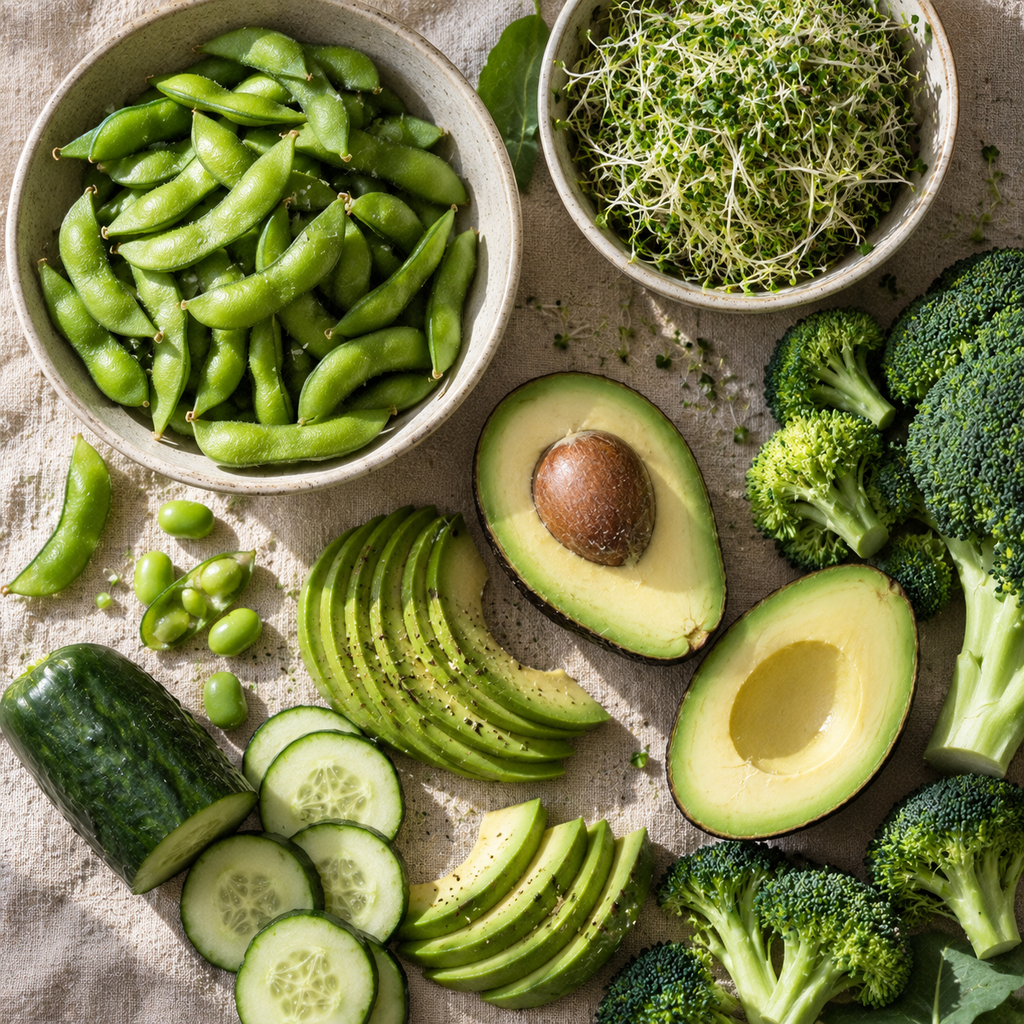
NMN, nicotinamide mononucleotide, is one of those precursors. Your body converts NMN into NAD+ after it is absorbed. It is already present naturally in small amounts in foods like edamame, avocado, broccoli, and cucumber. But the amounts in food are tiny. Not enough to meaningfully raise NAD+ levels.
Supplemental NMN gives your body a much larger supply of the raw material it needs to produce more NAD+. The conversion happens inside your cells, which is why it works differently from just taking a stimulant or a vitamin. It is not adding something foreign. It is giving your body more of what it already knows how to make.
What the research actually shows
I want to be honest here because there is a lot of hype around longevity supplements and most of it is ahead of the science.
The animal studies on NMN are strong. In mice, NMN supplementation improved energy metabolism, reversed markers of aging in muscle tissue, improved insulin sensitivity, and restored some aspects of cardiovascular function. The results are consistently positive across multiple labs.
Human trials are newer but building. A 2021 study published in Science found that NMN supplementation in older adults significantly raised blood NAD+ levels and improved muscle function. A 2022 trial out of Washington University showed improvements in how the body uses insulin and in muscle performance in postmenopausal women specifically. Several ongoing trials are looking at cognitive effects and skin.
The honest answer is that we are still in early days for human data. But “early days” in a field this rigorously studied does not mean the same thing as “no evidence.” It means the evidence is real and growing.

Who benefits most
Based on what the research shows so far, women over 45 are the group with the most to gain from raising NAD+ levels.
Here is why. NAD+ decline accelerates during perimenopause. The hormonal shifts of this period overlap with the cellular energy decline in a way that amplifies both. Lower estrogen reduces the body’s ability to synthesize NAD+ efficiently. So perimenopausal and postmenopausal women tend to have both lower NAD+ and a reduced ability to replenish it naturally.
That combination is probably why so many women in their late 40s and 50s describe feeling a change that goes beyond what hormones alone explain.
What I do and why
I started taking NMN about a year ago, after reading enough of the research to feel like it was worth trying.
I was not expecting dramatic results. I got gradual ones. Within about three weeks I noticed my energy in the afternoon felt more consistent. The crash I had been having between 2pm and 4pm most days became less reliable. My skin did not transform overnight but the texture improved in a way I noticed when I touched it, not just when I looked at it.
I am not going to tell you it will do the same for you. Bodies are different. But for me it became something I take every morning the way I take vitamin C. Just part of what I do.
If you want to look at what I use specifically, I have linked it here. I picked it based on the form of NMN used, the dose per serving, and the fact that it is tested by a third party. Those three things matter when you are shopping for any supplement in this category.

The lifestyle piece matters as much as the supplement
One thing the research is very clear about. NMN works better when your lifestyle is also supporting NAD+ production.
Exercise raises NAD+ naturally, especially anything that gets your heart rate up. Fasting or eating in a time window raises it too, because caloric restriction activates the same sirtuins that NAD+ supports. Good sleep is when most cellular repair happens, and that repair is NAD+ dependent. Alcohol is one of the fastest ways to burn through NAD+.
So if you add NMN but keep drinking every night and sleeping badly, you are running water into a leaking bucket.
The supplement is not a shortcut. It is an addition to a life that already supports your cells. That distinction is worth keeping in mind before spending money on anything in this space.
Start with sleep and daily movement. Add the rest when the foundation is there.
[…] of a routine I actually stick to. If you are curious about NAD+, I explained it in more detail in this article. And please talk to your doctor first, especially if you take any […]
[…] energy depends partly on a molecule called NAD+, which drops as we get older. I wrote about it in this article. I take a NAD+ and resveratrol supplement each morning because I like supporting that side of […]