

Skin over 50 works differently than it did at 30. It makes less collagen, holds less moisture, and burns faster in the sun, especially if you have light skin. That means your morning routine has one job: protect what you have and support what’s left.
You don’t need ten products. You need four, done in the right order.
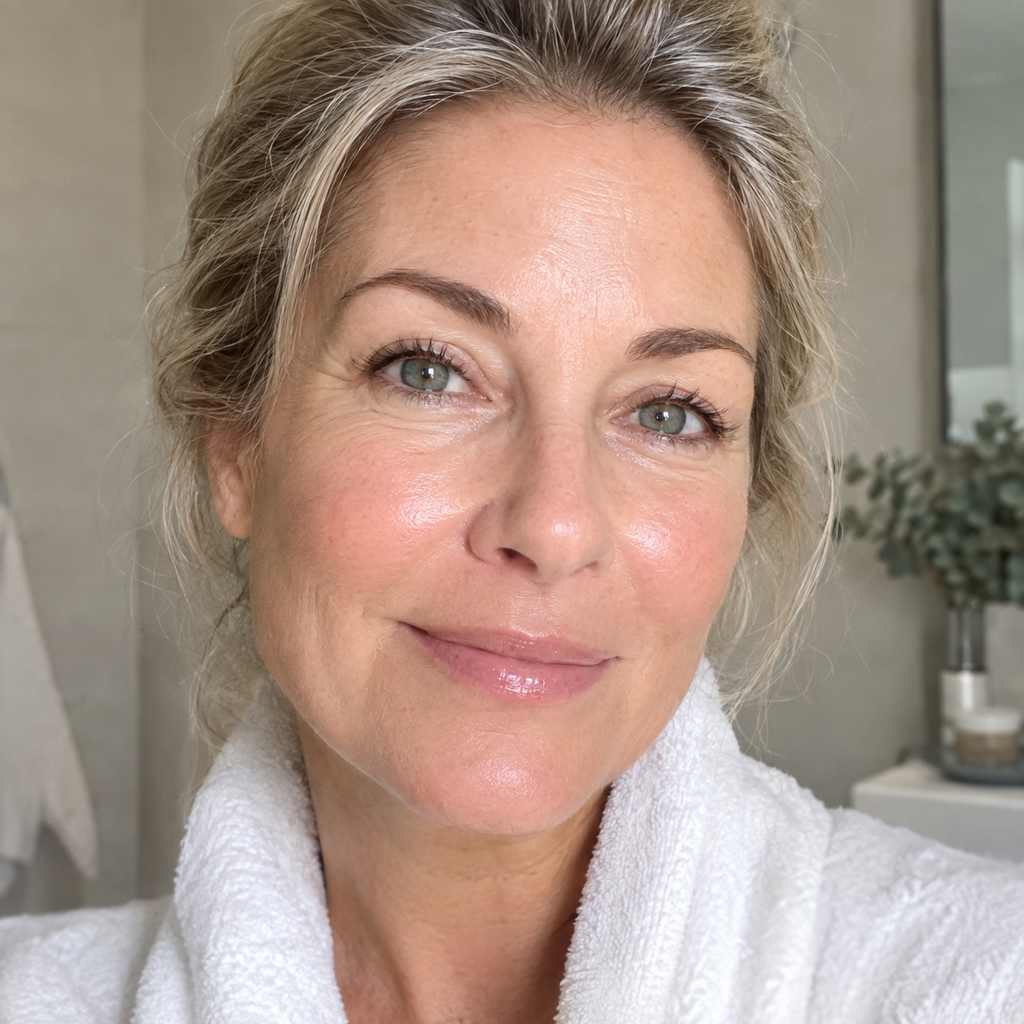
Step 1: Cleanser

Start with a gentle, hydrating cleanser. Not a foaming one that leaves your skin feeling tight.
Mature skin already produces less natural oil than it used to. A strong cleanser strips away what little barrier you have left, and that barrier is what keeps moisture in and irritants out. Light skin tends to be thinner and more reactive, so a harsh wash shows up fast as redness or dryness.
Look for a cream or gel cleanser with no sulfates. Thirty seconds with lukewarm water is enough. Hot water just adds to the dryness problem.
Step 2: Vitamin C
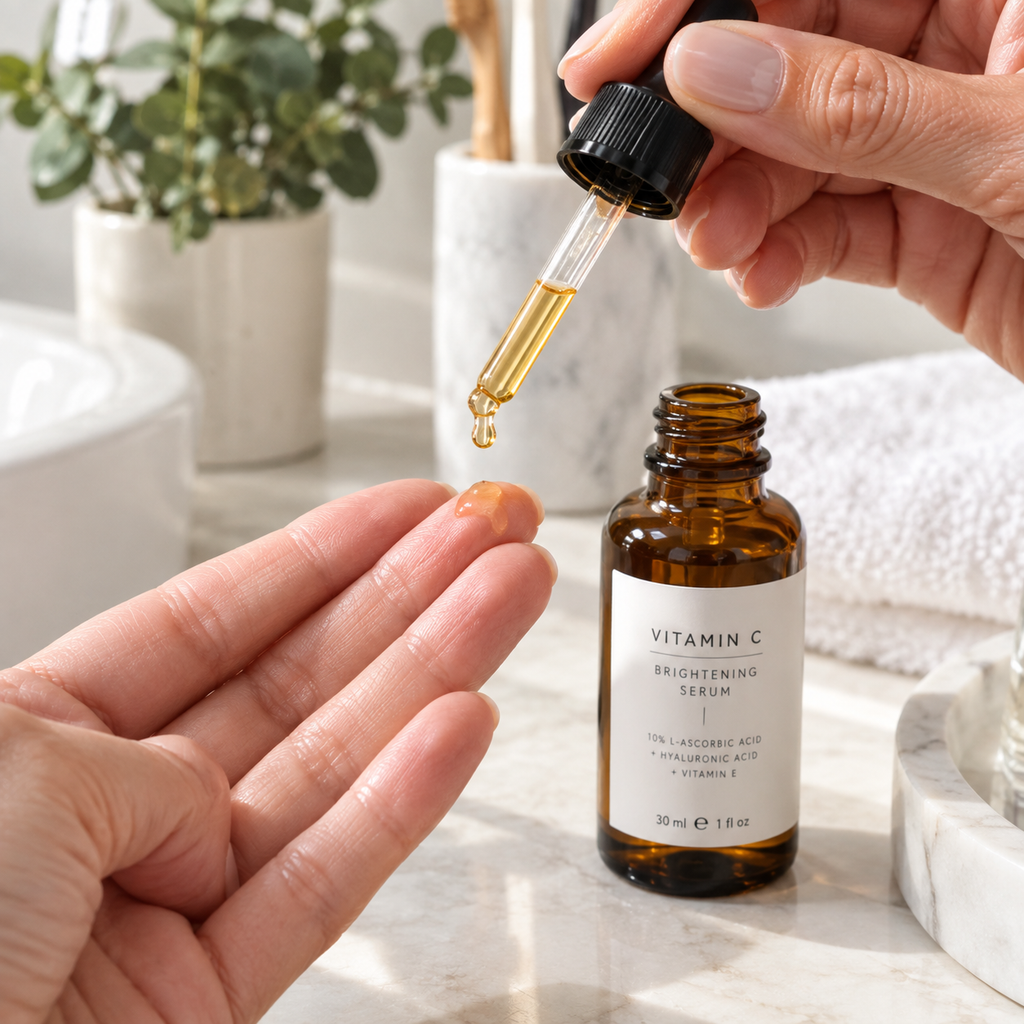
Apply a vitamin C serum right after cleansing, while your skin is still slightly damp.
Vitamin C does two things that matter a lot after 50. It fights free radical damage from sun and pollution, which speeds up fine lines and dullness. And it helps fade the brown spots that show up more easily on fair skin after decades of sun exposure.
Use a serum with vitamin C listed near the top of the ingredients, ideally in the 10-20% range. A few drops across your face and neck is plenty. Give it a minute to sink in before the next step.
Step 3: Hyaluronic Acid
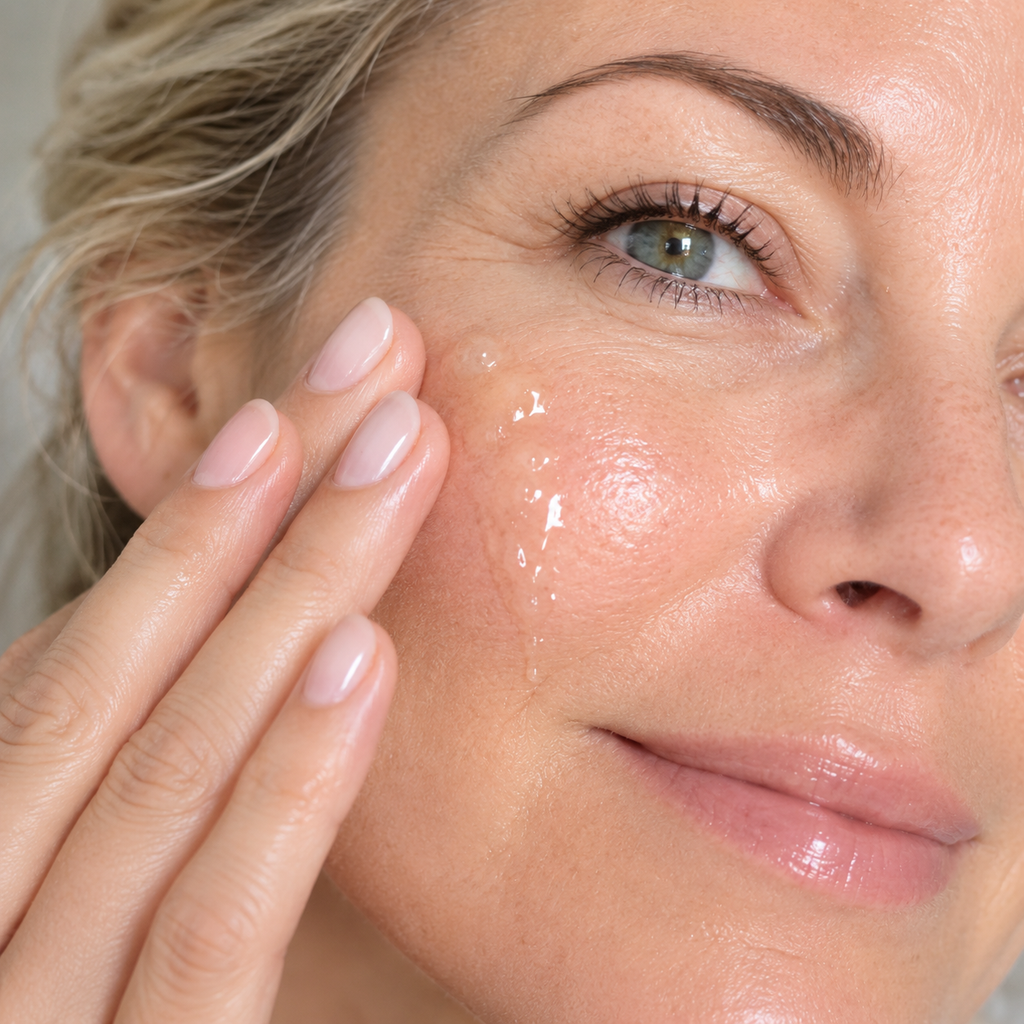
Next, layer on a hyaluronic acid serum or moisturizer.
Your skin’s natural hyaluronic acid drops by more than half between your 20s and your 50s. That’s a big reason skin looks less plump and lines look deeper. Hyaluronic acid pulls water into the skin and holds it there, which softens fine lines and gives you that “hydrated” look back.
Apply it to damp skin, not dry. It works by attracting moisture, so it needs some water nearby to pull from. If your skin feels tight afterward, you skipped this step or your face was too dry when you applied it.
Step 4: SPF 50
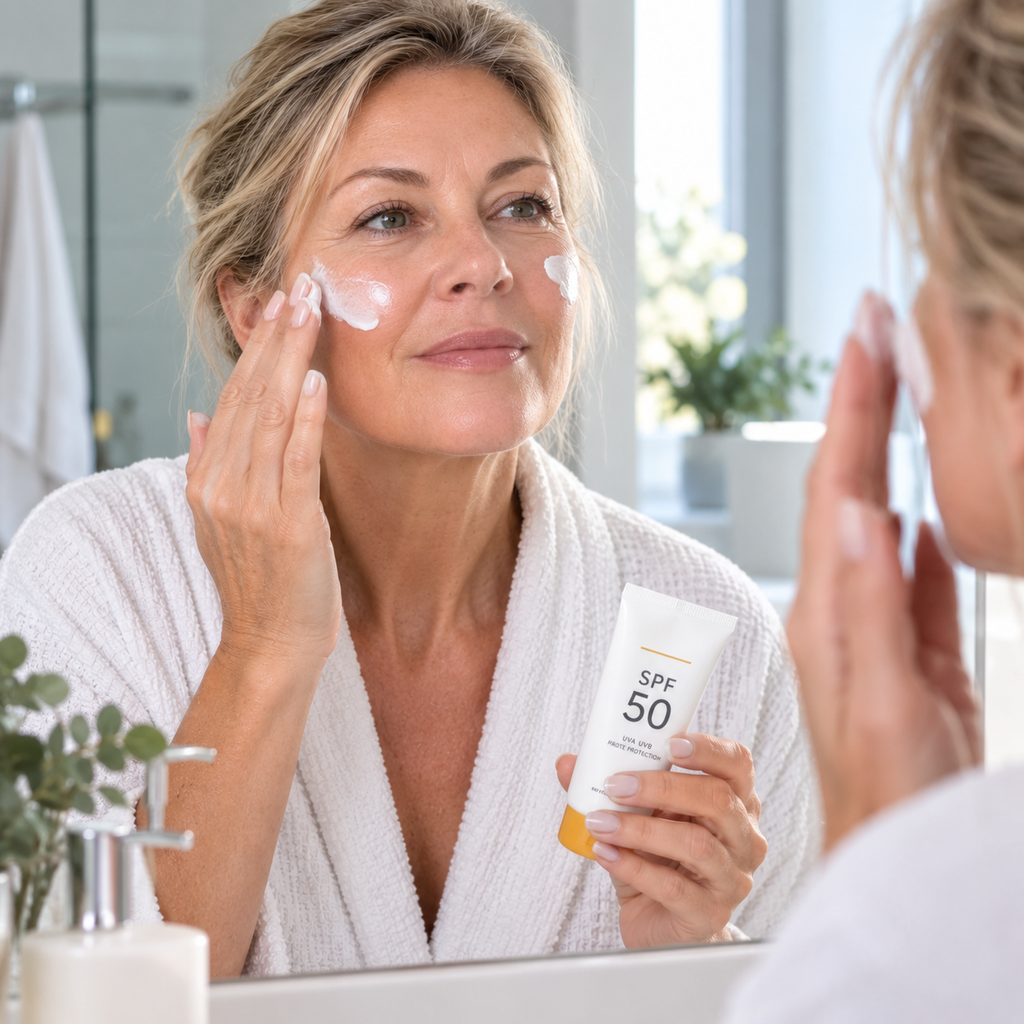
This is the step you cannot skip. Ever.
Fair skin has less natural melanin, which means less built-in sun protection. UV damage is the single biggest driver of visible aging: wrinkles, sagging, dark spots, thinning skin. It also raises your risk of skin cancer, and that risk climbs with age.
Use a broad-spectrum SPF 50 every morning, rain or shine, even on days you’re mostly indoors. UV rays come through windows. Reapply if you’re outside for more than two hours.
That’s the whole routine. Cleanser, vitamin C, hyaluronic acid, SPF 50, in that order, every morning. Give it four to six weeks before judging results. Skin cell turnover slows with age, so changes take longer to show up than they did when you were younger.
Beyond the Routine: Supporting Skin From the Inside
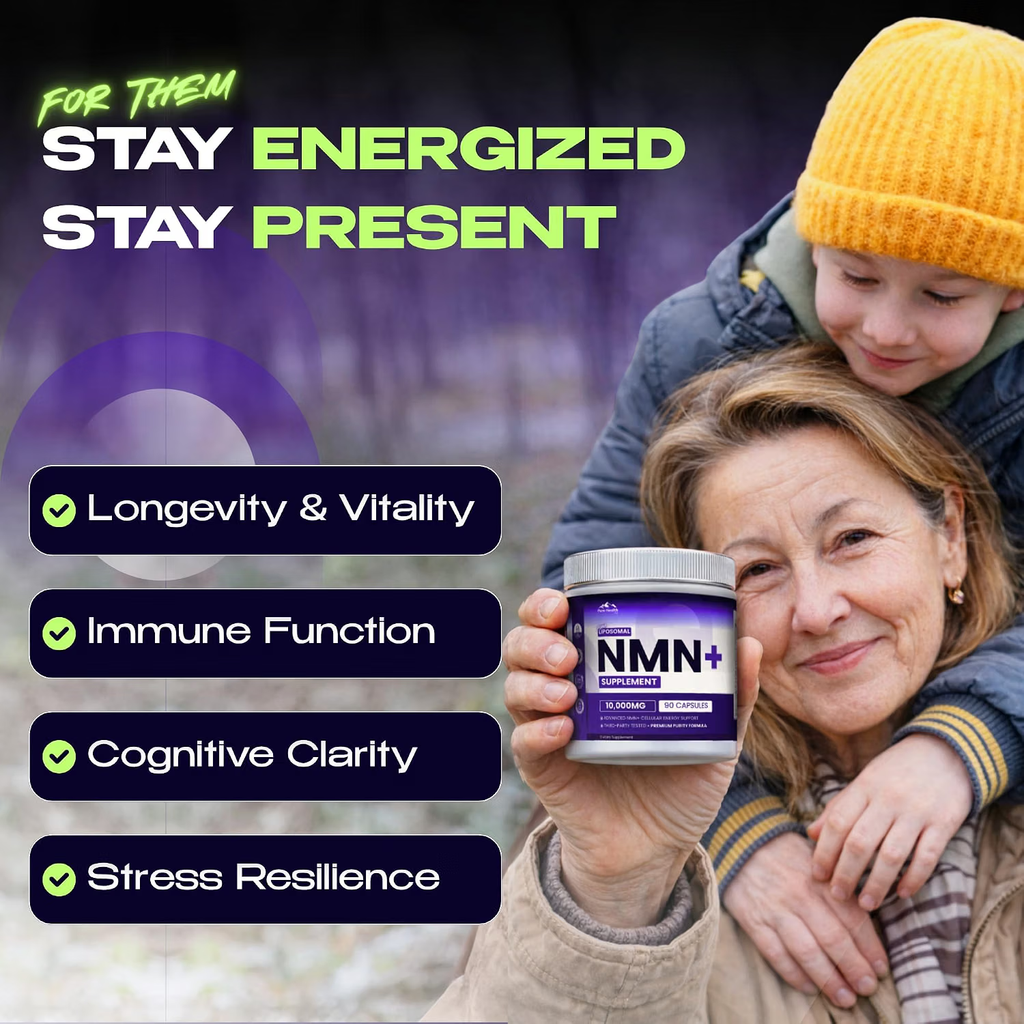
Topical products only do part of the job. A lot of what shows up on your skin starts at the cellular level, and that’s harder to fix with a serum alone.
As we age, our cells produce less NAD+, a molecule involved in energy production and cellular repair. Some women pair their skincare routine with an NMN supplement that supports NAD+ levels, often combined with resveratrol and French maritime pine bark extract for added antioxidant support. It’s not a replacement for sunscreen or a good cleanser, but it’s a reasonable addition if you’re already thinking about skin health from more than one angle.
If you try it, give it the same patience as the topical routine. Cellular changes take weeks, not days.